

Digital marketing in Kenya is no longer optional, it is a strategic imperative. Mobile internet penetration exceeds 90%, social media engagement is among the highest in Africa, and e-commerce platforms are growing exponentially. Businesses that fail to adapt risk losing market share. This article explores seven critical trends shaping Kenya’s digital marketing landscape in 2026, providing actionable insights for marketers, business owners, and startups.
Why Digital Marketing in Kenya Is Changing Rapidly
Question: Why should businesses prioritize digital marketing in Kenya in 2026?
Kenya’s digital ecosystem is transforming due to structural and behavioral shifts:
- Mobile dominance: Smartphones drive over 90% of internet usage. Non-optimized websites experience high bounce rates.
- Social engagement: Facebook has 11 million users, TikTok 7 million, and Instagram 6 million in Kenya, with high daily activity.
- E-commerce growth: Jumia and Kilimall report 20-30% year-on-year growth, facilitated by M-Pesa payments.
- Consumer behavior: Kenyan consumers research products online, engage with social influencers, and expect rapid digital experiences.
Example: Safaricom’s M-Pesa campaigns combine mobile-first design with social media amplification, driving both awareness and sales.
Key Takeaway: High mobile adoption, social media penetration, and e-commerce growth make digital marketing essential for Kenyan businesses.
Trend 1: Mobile-First Marketing
Question: Why must businesses prioritize mobile users in Kenya?
With over 90% of Kenyans accessing the internet via mobile, a mobile-first approach is critical. Websites that load slowly or are not responsive lose traffic and conversions.
Actionable Insights:
- Responsive design: Ensure content adapts to all screen sizes.
- Speed optimization: Compress images, reduce scripts, and leverage content delivery networks.
- Mobile payments: Integrate M-Pesa and Visa/Mastercard options for frictionless transactions.
- Concise content: Prioritize scannable text, infographics, and short videos.
Example: Nairobi-based SMEs use WhatsApp Business catalogs and mobile landing pages to convert leads efficiently.
Key Takeaway: Mobile-first optimization is non-negotiable; slow, unresponsive websites will lose over half of potential Kenyan traffic.
Trend 2: Social Media Dominance
Question: Which platforms deliver the highest ROI for Kenyan marketers?
Social media is Kenya’s primary channel for consumer engagement and brand building.
- Platform focus:
- TikTok & Instagram: Capture youth audiences with short, trending content.
- Facebook: Reach a broad audience and facilitate community engagement.
- X (formerly Twitter): Ideal for trending topics, political discussions, and thought leadership.
- Influencer marketing: Micro-influencers in Nairobi, Mombasa, and Kisumu deliver high engagement at lower cost than macro-influencers.
Example: Vivo Energy Kenya increased engagement 35% using micro-influencers on Instagram to promote seasonal promotions.
Key Takeaway: Engaging multiple platforms with culturally relevant content is critical for visibility; relying on a single channel is risky.
Trend 3: E-commerce & Digital Sales Growth

Question: How can businesses capitalize on Kenya’s e-commerce surge?
Kenya’s online shopping ecosystem is rapidly expanding. Consumers demand seamless, mobile-optimized shopping with reliable payments.
Actionable Insights:
- Checkout optimization: Mobile-friendly checkout and fast-loading pages.
- Payment flexibility: M-Pesa integration is mandatory; credit/debit card options expand reach.
- Delivery transparency: Clearly communicate shipping timelines and provide tracking options.
Example: Kilimall’s integration with M-Pesa and Cash on Delivery options has increased conversion rates by 25% year-on-year.
Key Takeaway: Seamless payments and logistics are decisive for e-commerce success; any friction reduces customer trust and sales.
Trend 4: Short-Form Video & Live Content
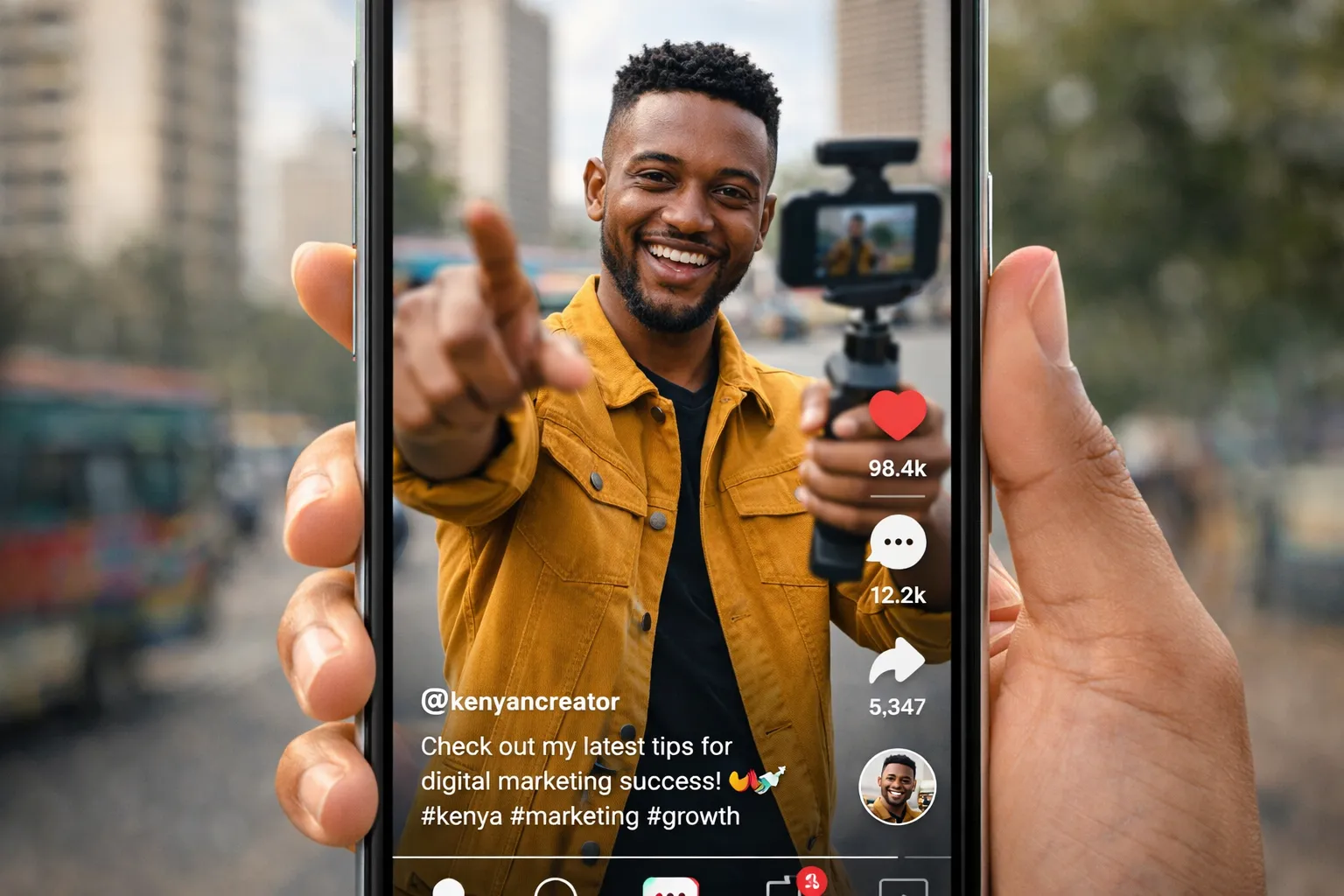
Question: Why should Kenyan brands invest in short-form video?
Short-form video content is the most consumed format on mobile in Kenya, driving higher engagement than static posts.
- Why it works: Visual storytelling resonates more effectively than text. Mobile-first audiences prefer quick, digestible content.
- Platforms: TikTok, Instagram Reels, YouTube Shorts.
- Use cases: Product demos, behind-the-scenes content, live Q&A sessions.
Example: Airtel Kenya’s TikTok campaign showcasing local musicians achieved 2 million views and increased SIM card sales by 18%.
Framework – Video Planning:
- Hook (0–3 seconds): Grab attention immediately.
- Value (3–45 seconds): Deliver concise, engaging content.
- Call-to-Action (CTA): Encourage purchase, sign-up, or share.
Key Takeaway: Short-form video and live content are essential for engagement and brand recall among Kenyan consumers.
Trend 5: Data-Driven Marketing

Question: How can Kenyan businesses use data to improve campaign performance?
Data-driven strategies enable precise targeting, personalization, and measurable ROI.
- Applications:
- Segment audiences by demographics, interests, and behavior.
- Track campaigns through Google Analytics and Meta Business Suite.
- Optimize paid advertising and organic content based on insights.
Example: Nairobi SMEs used WhatsApp Business analytics to send region-specific promotions, achieving a 22% conversion uplift.
Framework – Data-Driven Marketing Cycle:
- Collect Data: Website, social media, sales.
- Analyze: Identify trends and segments.
- Act: Target campaigns to specific audiences.
- Optimize: Refine campaigns based on performance.
Key Takeaway: Data-driven marketing increases ROI by ensuring campaigns reach the right audience at the right time.
Trend 6: AI and Automation
Question: How can AI and automation enhance marketing efficiency in Kenya?
AI and automation allow brands to scale campaigns, handle repetitive tasks, and deliver personalized experiences.
- Applications:
- Chatbots for 24/7 customer support.
- Automated social media scheduling and email campaigns.
- AI tools for content generation and performance analysis.
Example: Kenyan fintech startups use chatbots on WhatsApp to handle customer queries, reducing response time by 80%.
Framework – AI Integration Checklist:
- Identify tasks suitable for automation
- Select AI tools
- Monitor performance
- Maintain human oversight
Key Takeaway: AI enhances efficiency but must complement culturally relevant human interaction to maintain trust.
Trend 7: Localized and Culturally Relevant Marketing
Question: Why is localization critical for campaigns in Kenya?
Kenya’s linguistic and cultural diversity requires tailored marketing to ensure resonance.
- Key strategies:
- Use local languages (Swahili, Sheng) in campaigns.
- Incorporate cultural references, humor, and storytelling.
- Adapt campaigns to regional preferences and events.
Example: Coca-Cola Kenya’s campaign during Mashujaa Day used Swahili slogans and regional storytelling, achieving a 40% engagement increase.
Key Takeaway: Culturally relevant content increases engagement, brand loyalty, and conversion rates.
Conclusion – Staying Ahead in Kenya’s Digital Landscape
Question: What steps should businesses take to thrive in 2026?
- Adopt mobile-first, social media, e-commerce, video, data-driven, AI, and localization strategies.
- Pilot small campaigns, measure performance, and scale successful initiatives.
- Stay updated with emerging tools, platforms, and consumer behaviors.
Practical Tip: Start with one high-impact trend—such as mobile optimization or TikTok video campaigns—track ROI, and expand based on data.
Key Takeaway: Success in Kenya’s 2026 digital marketing landscape depends on adopting relevant trends, leveraging data, and maintaining cultural relevance.